Why China-Taiwan Tensions Are Rising Again, What You Need to Know
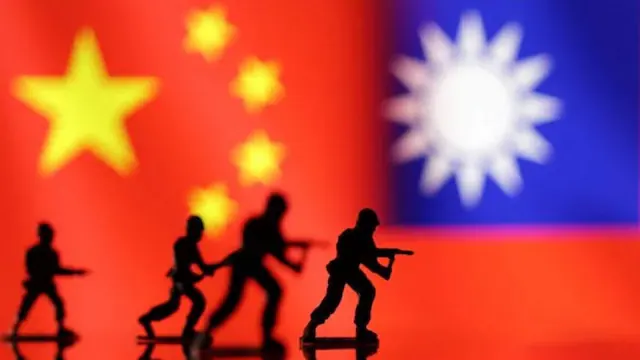
Taiwan has launched Han Kuang military exercises amid growing military pressure from China. The drills focus on defending infrastructure such as airports and seaports. Know more
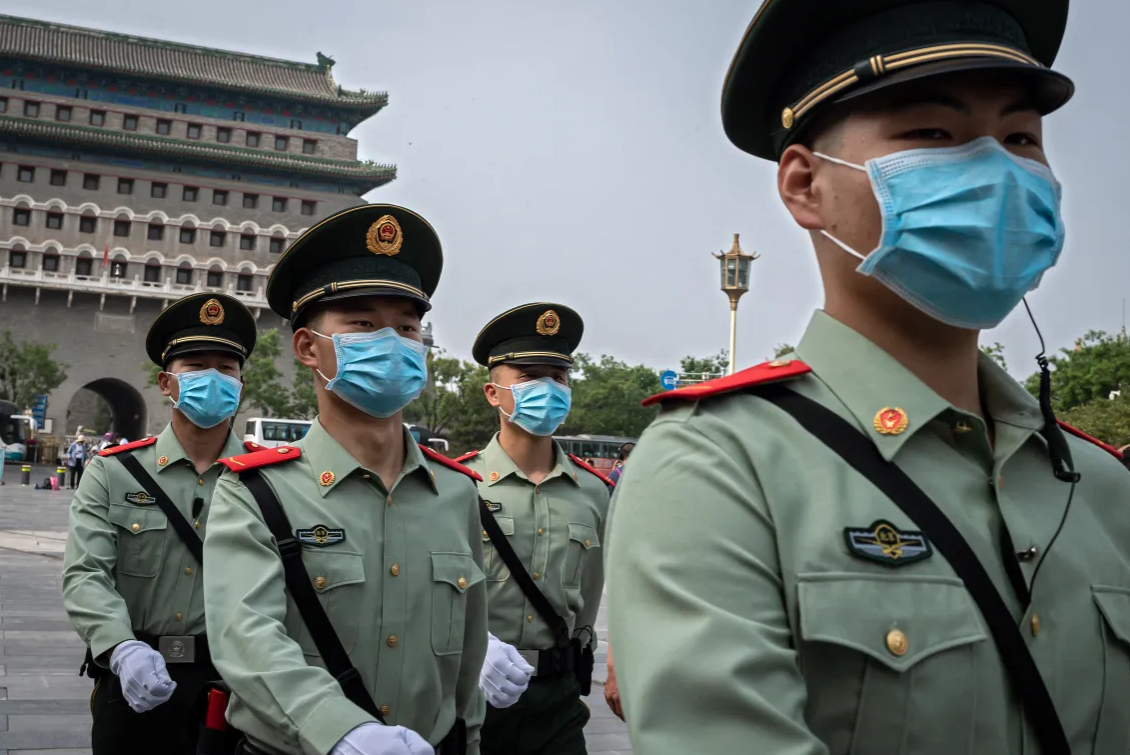
China-Taiwan relations are again under the global spotlight after Beijing ramped up its military and political pressure on the island in recent months. Tensions between the two sides have been simmering for decades, but recent developments—including sharp rhetoric from Beijing and military drills around the island—have reignited fears of escalation in the Taiwan Strait.
A recent Financial Times report reveals that Chinese officials conveyed a private warning to US counterparts, saying that upcoming actions by Taiwan’s new president, William Lai, could cross a “red line” for Beijing.
Lai, who assumed office in May 2025, has long been seen as a pro-sovereignty figure. His speech during his inauguration, reaffirming Taiwan’s separate identity from China, appears to have escalated Beijing’s concerns.
What Is The China-Taiwan Dispute?
The roots of the China-Taiwan conflict trace back to the Chinese Civil War, which ended in 1949. The defeated Nationalist government (Kuomintang) retreated to Taiwan, while the victorious Communist Party established the People’s Republic of China (PRC) on the mainland. Since then, Beijing has considered Taiwan a breakaway province that must be reunited with the mainland, by force if necessary.
Taiwan, however, has evolved into a democratic, self-governing entity with its own government, military, and foreign policy direction. Though it does not officially declare independence, most of Taiwan’s 23 million citizens identify as Taiwanese rather than Chinese.
What Triggered The Latest Escalation?
Taiwan has launched its annual Han Kuang military exercises this week amid growing military pressure from China. These large-scale drills, involving live-fire training and simulated attacks, aim to test Taiwan’s combat readiness in the face of a potential Chinese invasion. This year’s exercises are especially significant, following increased incursions by Chinese warplanes and naval vessels around the island, as well as escalating rhetoric from Beijing.
The 2025 Han Kuang drills focus heavily on defending key infrastructure, such as airports and seaports, and simulating responses to cyberattacks and blockades. Taiwanese forces are practicing joint operations across air, sea, and land, including mobilization of civilian resources. The exercises also reflect Taipei’s efforts to adapt to modern warfare, particularly asymmetric strategies meant to counter a more powerful Chinese military.
The Financial Times reports that Taipei sees these drills not just as a test of readiness but as a crucial signal of deterrence. Analysts believe the Han Kuang exercises are Taiwan’s way of demonstrating to both domestic and international audiences that it is prepared to defend its democracy and territorial integrity. As tensions rise across the Taiwan Strait, the stakes of these annual drills have never been higher, underscoring Taiwan’s precarious position in one of the world’s most volatile flashpoints.
This comes on the back of increased Chinese military activity, including People’s Liberation Army (PLA) air and naval patrols near Taiwan.
Lai has stated that Taiwan seeks peace, not conflict, but reiterated that the island will not back down from defending its sovereignty. Meanwhile, the US continues its policy of “strategic ambiguity” while supplying arms to Taiwan and conducting joint military exercises in the Indo-Pacific.
The International Stakes
The Taiwan Strait is one of the world’s most important geopolitical flashpoints. Not only does it sit along key global shipping routes, but Taiwan is also home to the world’s leading semiconductor manufacturers, including Taiwan Semiconductor Manufacturing Company (TSMC). Any military conflict would have serious consequences for global supply chains and economic stability.
Furthermore, the dispute involves major powers. The US is Taiwan’s unofficial ally, bound by the Taiwan Relations Act to provide defensive support. Japan, Australia, and several European nations have also expressed concern about Chinese aggression.
Beijing’s Red Lines
According to analysts quoted by the Financial Times, Beijing is trying to deter what it perceives as gradual steps towards Taiwan’s formal independence. While China knows an immediate military conflict would be risky, it is employing a mix of psychological warfare, economic coercion, and diplomatic isolation to pressure the island.
However, President Lai’s government has doubled down on democratic values and continues to seek stronger international partnerships. This defiance has further provoked Beijing, which accuses the US of emboldening Taiwan.
What Happens Next?
Experts believe that the situation is currently in a phase of “gray-zone conflict”, where intimidation and deterrence take precedence over direct warfare. However, the risk of miscalculation remains high, especially with constant military activity around the Taiwan Strait.
Former US President Joe Biden had reiterated that Washington opposes any unilateral change to the status quo by force. While the US is not bound to defend Taiwan militarily, its strategic interest in preventing Chinese dominance in Asia-Pacific makes involvement likely in the event of escalation.
Taiwan, meanwhile, is ramping up its military preparedness and forming deeper alliances, particularly with Japan and the US. Despite mounting pressure, the island shows no signs of yielding.
Why This Means For Indians?
India, which has its own tense relationship with China, watches the Taiwan issue closely. Any instability in the Indo-Pacific affects regional security and economic flows. Moreover, India’s support for a “rules-based international order” and growing ties with the US and Quad nations place it at odds with China’s aggressive posturing.
While India officially follows the “One China” policy, it has shown increased diplomatic warmth towards Taiwan in recent years through trade and cultural exchanges. The Taiwan Strait tensions could influence India’s strategic decisions, especially in a post-Galwan world.