China tariffs delayed again, hours before sharp increase was to take hold
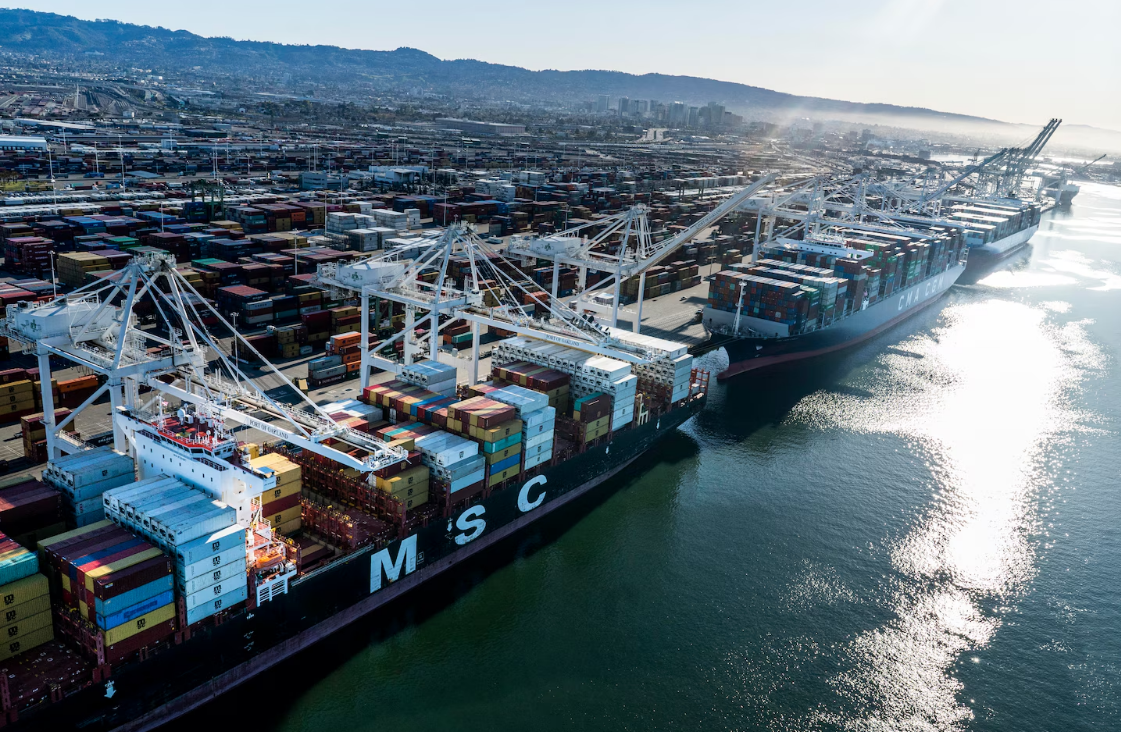
President Donald Trump delayed high tariffs on imports from China again, this time for 90 days.
“I have just signed an Executive Order that will extend the Tariff Suspension on China for another 90 days,” Trump posted on Truth Social. “All other elements of the Agreement will remain the same.”
Negotiators have been scrambling to cement a deal with China since a broad framework between the two countries was announced earlier this year. Reaching a deal with China, one of the United States’ top trading partners, has been a key focus for Trump administration negotiators, otherwise Trump had threatened that tariffs could rise as high as 145 percent.
But tariffs have changed numerous times since Trump first threatened the high rate on Chinese imports in April, as foreign leaders negotiate and try to secure exemptions. It’s unclear how high tariffs might rise if a deal is not reached by the new deadline, Nov. 10.
Negotiators for the countries have met in Geneva, London and Stockholm this year.
The terms of the deal seem to still be changing. Late Sunday night, Trump wrote on Truth Social about the work in trying to hammer out an agreement that would lead to U.S. sales of soybeans to China.
“China is worried about its shortage of soybeans. Our great farmers produce the most robust soybeans. I hope China will quickly quadruple its soybean orders. This is also a way of substantially reducing China’s Trade Deficit with the USA. Rapid service will be provided. Thank you President XI,” Trump wrote.
The extension between China and the U.S. could keep financial markets calm, after they were roiled earlier this year by Trump’s April tariffs, which included the high rate on Chinese goods.
China supplies a high number of household products to U.S. consumers, encompassing items from sneakers to sweaters to spoons.
The U.S. also depends on China for manufacturing equipment and materials, including rare earth minerals, which are used to make such things as electronics, military drones and battery-powered vehicles. The flow of such minerals has been a bargaining chip for China, which is a leading exporter of rare earths.
The U.S. also struck an unusual agreement: Chipmakers Nvidia and Advanced Micro Devices will pay the government 15 percent of their revenue from sales of artificial intelligence chips in China, as a prerequisite for obtaining the licenses.
China confirmed the extension agreement on Tuesday, but it has otherwise said little about the prospect of a deal on rare earths, semiconductors or soybeans.
“China believes the United States should abandon its zero-sum mentality and lift a series of unreasonable economic and trade restrictions on China,” Liu Pengyu, spokesperson for the Chinese Embassy in Washington, said in a statement on the microchip deal.
At the height of the trade tensions in April, when tariffs were so high they amounted to a de facto embargo, China showed that it could create supply shortages that risked empty shelves at Walmart and put U.S. defense contractors “on the verge of huge disruption” from a lack of access to rare earth magnets, said Feng Chucheng, founding partner of Hutong Research, a consultancy based in Beijing.
“Both sides understand that this is a situation they don’t want to go back to again,” but it will still be difficult to reach a deal to cut tariffs or roll back export controls that pleases both Washington and Beijing, Feng said.
China agreeing to buy more U.S.-grown soybeans as Brazil, its other main supplier, enters winter could create an opening for an agreement, but Chinese buyers will be hard-pressed to immediately increase purchases after record imports in recent months, analysts said.
U.S. tariff policy has fluctuated wildly as Trump threatens and imposes tariffs on global trading partners, leading to a vast amount of uncertainty among manufacturers, importers and consumers. The tariff policy has also begun to push prices up and at the same time prompted consumers to pull back on spending. The U.S. labor market is also slowing down, as companies hold off on hiring because of the uncertainty.
“We’ve never seen this extent of trade policy uncertainty play out in such a short period of time,” said Marc Busch, a professor of international business diplomacy at Georgetown University.
Tariffs, which are taxes paid by U.S. importers, are likely to lead to even higher prices for consumers, as rising costs spread among businesses, economists say. Americans are already paying more for some household goods, and escalating prices could end up costing households an average of $2,400 per year, according to estimates from the Budget Lab at Yale University.
The Trump administration has announced deal frameworks with a handful of trading partners around the world, imposing tariffs of 15 percent on goods from the European Union and 20 percent on goods from Vietnam, among others.
Landing a similar deal with Beijing will be “far from a walk in the park,” said Wendy Cutler, senior vice president at the Asia Society Policy Institute, a think tank, and a former deputy U.S. trade negotiator.
“Having learned important lessons … during Trump 1.0, Beijing will be a more demanding counterpart this time around,” Cutler said.