A spiritual defiance that maps Tibet’s future
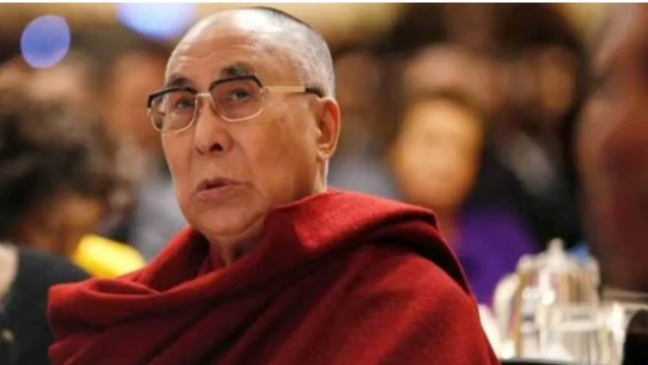

By stating that his reincarnation will occur in a ‘free country,’ the Dalai Lama has redefined the geography of Tibetan identity.
In the twilight of his ninth decade, His Holiness the 14th Dalai Lama has made a pronouncement that reverberates far beyond the cloisters of Tibetan monasteries or the quiet hills of Dharamshala. He has declared that he will reincarnate—and crucially, that this reincarnation will occur outside of Tibet, so long as the land remains under Chinese occupation. This is not merely a spiritual decision. It is a geopolitical signal, a cultural safeguard, and a moral compass for Tibet’s future.
In Tibetan Buddhism, reincarnation is not a passive cycle but a conscious act of compassion. For the Dalai Lama to choose rebirth outside of Tibet is to reject the legitimacy of Chinese control over the Tibetan plateau. It is a refusal to allow Beijing to co-opt the sacred tulku system—a centuries-old tradition of recognizing reincarnated spiritual masters—into its machinery of authoritarian rule.
China has long insisted that it alone holds the authority to approve the next Dalai Lama, citing arcane rituals like the Golden Urn system and state-sanctioned religious laws. But His Holiness’s declaration reclaims spiritual sovereignty. It affirms that the Gaden Phodrang institution, not the Chinese Communist Party, will determine his successor. In doing so, the Dalai Lama has drawn a line in the sand: the soul of Tibet cannot be colonized.
By stating that his reincarnation will occur in a “free country,” the Dalai Lama has redefined the geography of Tibetan identity. Tibet, in this vision, is not merely a territory—it is a moral landscape. Wherever Tibetan values of compassion, wisdom, and freedom are upheld, there Tibet lives.
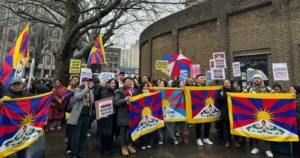
This shift has profound implications. It decentralizes Tibetan resistance, empowering the diaspora and global allies to carry forward the legacy of Tibetan Buddhism and cultural survival. It also signals to younger generations that the struggle for Tibet is not confined to its borders but is a global moral imperative.
The Dalai Lama’s decision is also a strategic preparation for the inevitable: his passing. By asserting control over his succession, he is forestalling a crisis of legitimacy that Beijing hopes to exploit. China will almost certainly appoint its own “Dalai Lama,” born within its borders and raised under its ideological tutelage. But His Holiness’s pronouncement ensures that Tibetans and the world will know the difference between a spiritual leader and a political puppet.
This clarity is essential. As the Dalai Lama’s longtime translator poignantly observed, “We are leaning on this very solid rock. One day, when the rock goes away, what are we going to do?” The answer, now, is clearer: we will follow the path he has laid, one that leads not to submission but to spiritual defiance and cultural renewal.
The Dalai Lama’s reincarnation outside Tibet is not an escape—it is an act of reclamation. It asserts that Tibet’s future will not be dictated by tanks or treaties, but by the enduring power of truth, compassion, and spiritual autonomy. In a world increasingly shaped by authoritarianism and erasure, His Holiness has offered a radical blueprint: that the soul of a people can transcend borders, and that exile can become a sanctuary of resistance.
Tibet’s future, then, is not just about where the Dalai Lama will be reborn. It is about where the spirit of Tibet will continue to rise.