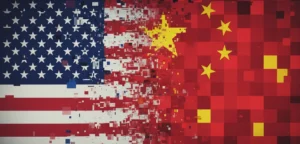
The age of uncontested US primacy is fading and a new chapter in global politics is being written
President Xi Jinping’s renewed call for a new
global security and economic order that places the Global South at its core is more than rhetorical positioning against the United States. It signals a paradigm shift in the architecture of world politics.
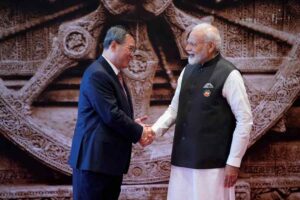
Speaking at the Shanghai Cooperation Organisation (SCO) summit in Tianjin on Monday, Xi
called on nations to “oppose hegemonism and power politics” and instead “practise true multilateralism”. The message was unmistakable: the dominance of the US in shaping global governance is being contested, and Beijing seeks an alternative framework designed to reshape the trajectory of international relations in the decades ahead.
The timing of Xi’s remarks is crucial. The global order has been weakened by the dual shocks of the Covid-19 pandemic and intensifying geopolitical rivalries. While the US retains unrivalled military capacity and deep financial reach, its credibility among developing nations has eroded in recent years as its policies are often viewed through the lens of narrow self-interest.
This disillusionment resonates across the Global South, where long-standing frustrations over exclusion from international decision-making remain unresolved. Beijing’s vision taps into these frustrations. For many developing nations, globalisation’s asymmetries, ranging from
debt dependency to
vaccine inequality, have exposed the failures of existing institutions. The allure of Beijing’s proposal lies in its promise of inclusivity, yet whether this inclusivity can translate into practice remains an open question.
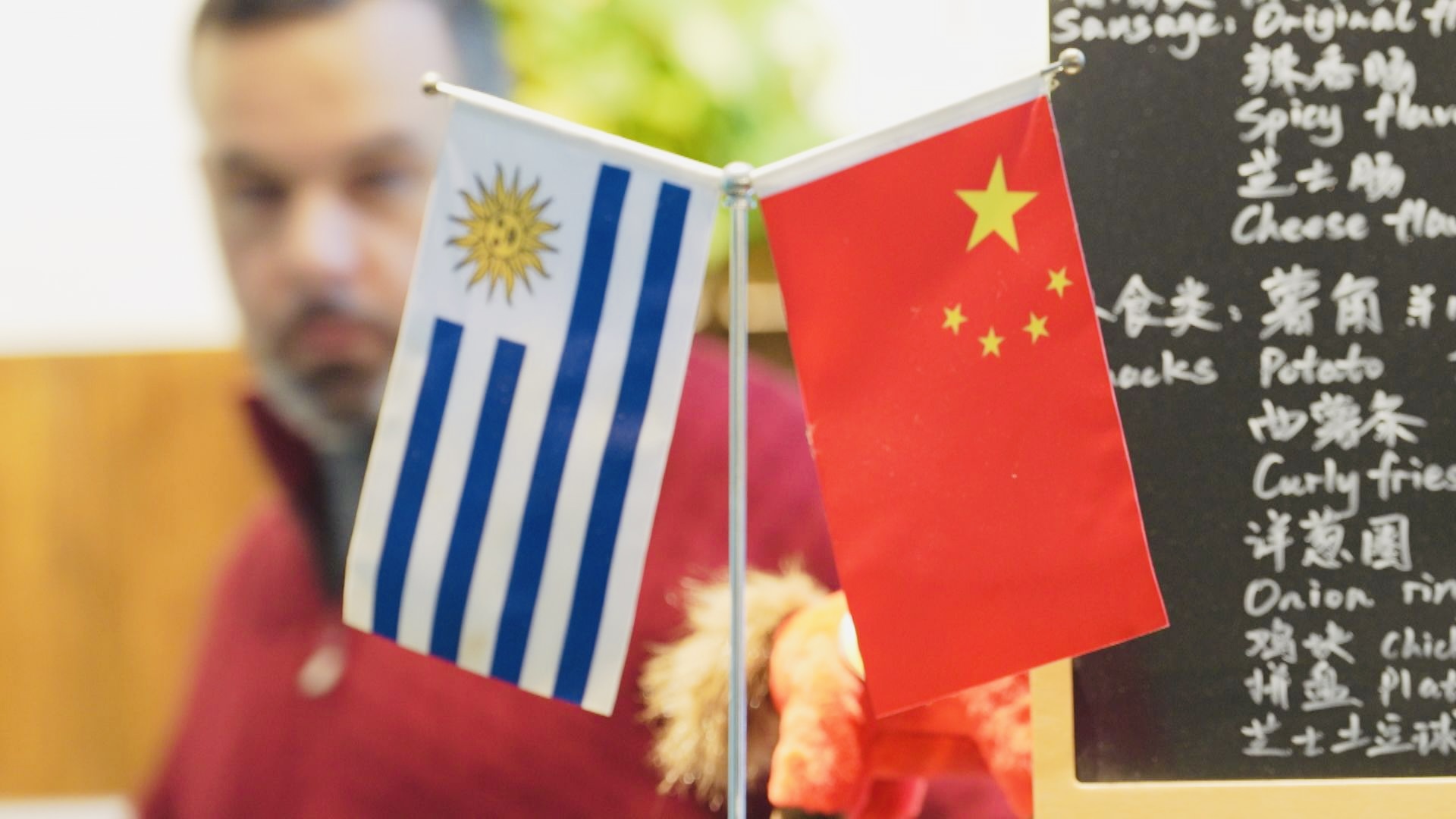
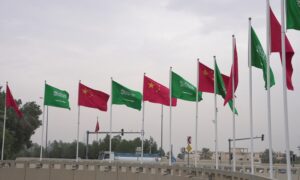
For the Muslim world and broader Middle East, it presents both opportunity and risk. Historically locked into Cold War binaries and reliant on the US security umbrella, many states are now recalibrating their alignments. Gulf states are strengthening
energy and investment ties with China, Turkey is engaging with the Brics grouping of developing nations, and crisis-ridden economies such as Egypt and Pakistan are increasingly
looking eastward for financing.
Xi’s call to practise “true multilateralism” appeals to states disillusioned with Western-led institutions such as the International Monetary Fund and World Bank, whose
conditions for relief have at times triggered domestic unrest. For these societies, diversification offers not just economic relief but also political leverage to reduce dependency on Washington.
The strategic weight, however, extends beyond economics. Xi’s emphasis on opposing “hegemonism” speaks directly to the Middle East’s yearning for conflict resolution. Russia’s invasion of Ukraine and Israel’s war in Gaza highlight not only regional instability but also the
dysfunction of the global system.
For Muslim-majority societies, the Gaza war is particularly searing. Beijing’s implicit argument is that a Global-South-led order might act differently, mediating conflicts
without entrenched biases. Its facilitation of Iran-Saudi Arabia rapprochement in 2023 showed that China is prepared to act as a peace broker. Whether it can scale such efforts remains to be seen, but the Middle East is watching closely.
Looking forward, Beijing’s ambition is to institutionalise this alternative order through platforms
such as Brics, the SCO and the Belt and Road Initiative. Should these frameworks coalesce, the Global South could coordinate more effectively on energy, trade and security.
For Muslim-majority states, this could mean greater bargaining power on climate finance, debt restructuring and technology transfer, yet multipolarity is not without risk. Replacing US hegemony with Chinese dominance could simply entrench a new hierarchy. China’s economic leverage, whether in debt negotiations
with African nations or its control of critical supply chains, underscores the possibility that an “inclusive” order could mask asymmetric dependencies.
The credibility of China’s vision will ultimately rest on outcomes. Calls for “true multilateralism” risk ringing hollow if not accompanied by
concrete progress. Should Beijing carve out a credible peace process in Gaza or Ukraine, it would accelerate the legitimacy of a Global-South-led order. For Muslim societies, such progress would demonstrate that international politics is not a zero-sum game dictated by great powers, but rather an arena where aspirations for dignity and peace are acknowledged.
The Middle East, long reduced to a geopolitical chessboard, is uniquely positioned to test the viability of this vision. If China and its partners can
deliver on ceasefires, humanitarian aid and renewed negotiations in Gaza, the symbolic impact would reverberate globally. It would underscore that the Global South is not merely an economic bloc but a normative project aimed at redefining how power is exercised and to whose benefit.
Looking ahead, the global trajectory points to a bifurcated yet interdependent order. The US will remain central in technological innovation and military power, but its primacy will be challenged by a rising constellation of actors whose legitimacy stems from representing most of the world’s population.
For the Muslim world, aligning with this shift could open unprecedented opportunities to shape global norms around justice, development and peace. Yet success depends on agency: fragmented alignments will only expose states to manipulation by external powers. Unified positions, by contrast, could elevate their role in shaping the new order.
China’s vision is ultimately a wager that the Global South, long confined to the margins, will rise to the centre of world politics. Whether this leads to genuine empowerment or another form of dependency hinges not only on Beijing’s intentions but also on the strategic choices of states in the Middle East, Africa and Asia.
What is clear is that the age of uncontested US primacy is fading. A new chapter in global politics is being written, one where the Muslim world must decide whether it remains an object of great power competition or emerges as a subject shaping its own destiny.