How China and the Gulf states are shaping Central Asia’s energy transition
Since the launch of the Belt and Road Initiative (BRI) in 2013, China has become one of the largest overseas energy investors. While much of its engagement has traditionally focused on fossil fuels, the post-pandemic years have marked a shift towards renewable energy investment, particularly in developing countries.
During the same period, Beijing promoted the Green Belt and Road Initiative narrative to counter criticisms that the BRI was excessively carbon intensive. The post-pandemic period has also witnessed a remarkable growth in clean energy investment from the Gulf states. Central Asia, historically known for its hydrocarbon wealth, has increasingly attracted investment in renewables from Chinese and Gulf firms since 2022.
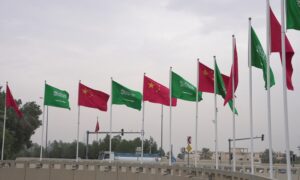
China and the Gulf states are influencing Central Asia’s energy transition through complementary competition, where they invest in renewable energy projects while occupying distinct, mutually supportive roles. Such foreign investment can accelerate decarbonisation in the region but also risks creating dependency. Which outcome prevails will depend on Central Asia’s capacity to diversify partners and shape the terms of investment.
While not all BRI-related agreements signed between China and Central Asia have materialised in the past, China has commissioned and completed multiple projects in the region since the pandemic, especially in renewable energy. Kazakhstan has become the primary recipient of Chinese clean energy finance in Central Asia. According to the China BRI Investment Report 2024, Kazakhstan attracted US$4.6 billion in BRI investments in 2024, with a significant portion directed to renewables and electricity production.
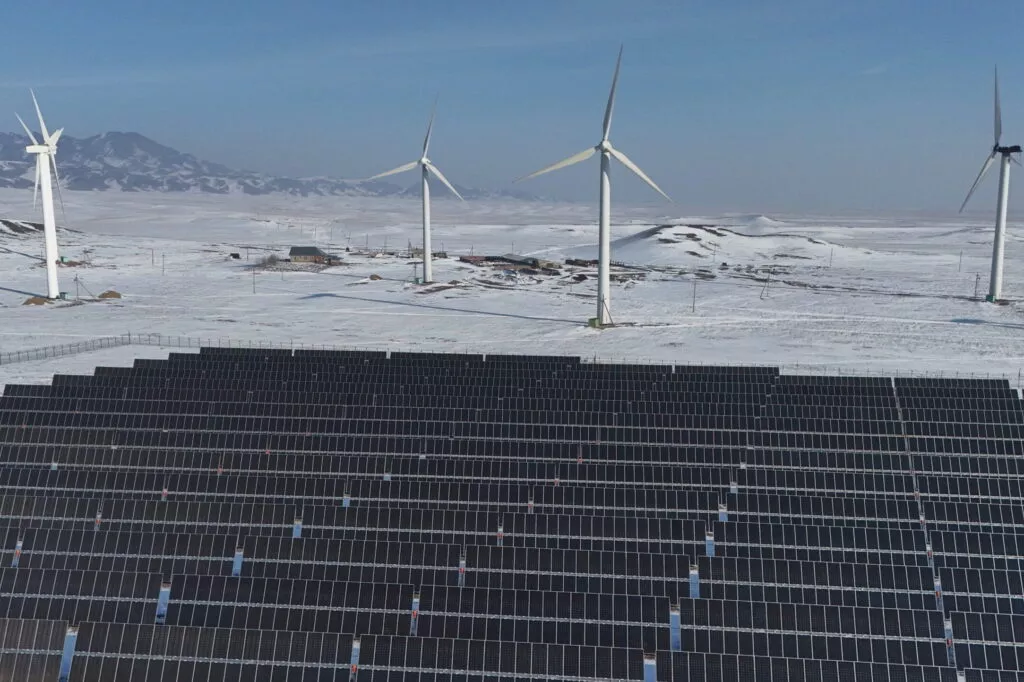
Flagship projects include the Zhanatas 100 megawatt (MW) wind farm, constructed by China Power International Holding, and several solar plants in the Karaganda and Almaty regions. These projects represent some of the largest renewable energy installations in the country and are often presented as evidence of China’s important role in diversifying Kazakhstan’s energy mix. Gulf companies such as Masdar (UAE) and ACWA Power (Saudi Arabia) have also invested in Kazakhstan’s renewables, focusing on wind farms and battery storage.
Uzbekistan has also emerged as a hub for Chinese investment. In 2023, Chinese BRI investments in Uzbekistan amounted to roughly US$1.4 billion, mostly directed towards solar and wind power. The 400 MW photoelectric plant in the Andijan region, developed with Chinese financing and technology, marked the country’s first utility-scale solar project.
Chinese companies face complementary competition from Gulf investors, particularly from Masdar, which has secured several major solar and wind power contracts in Uzbekistan. A case in point is the Zarafshan wind farm in Uzbekistan, a project with a planned capacity of 500 MW, making it the largest single-unit wind energy project in Central Asia. The initial project developer was Masdar, which invited the Chinese turbine manufacturer Goldwind to supply 111 turbines. PowerChina then entered as a construction contractor building the farm.
Kyrgyzstan, Tajikistan and Turkmenistan have seen limited clean energy finance from China. In Kyrgyzstan and Tajikistan, small-scale Chinese financing has been directed more towards hydropower rehabilitation, electricity transmission lines and grids, rather than new large-scale solar or wind farms. Structural barriers such as a small market size and a lack of attractive regulatory frameworks for solar and wind power have constrained large inflows of Chinese finance thus far.
Chinese firms invest in Central Asia because they face production overcapacity at home. Central Asia offers a promising market to export technology and expertise. Investing abroad helps sustain Chinese manufacturers while allowing them to test and showcase technologies in diverse environments. By financing and building renewable energy plants, China strengthens diplomatic ties and embeds itself in Central Asia’s critical infrastructure networks.
Yet as of 2025, China’s renewable energy footprint in Central Asia remains smaller than in Africa and Southeast Asia. Several reasons may explain this discrepancy. Africa’s rapidly growing population and Southeast Asia’s industrial expansion create much greater demand for renewable energy than the growing demand currently observed in Central Asia. The region’s regulatory and financial environments also require improvement. And since Central Asia remains heavily dependent on fossil fuels in exports and domestic consumption, the scope for renewables has expanded more slowly than in regions with larger capacity demand and stronger renewable energy incentives.
One area where China is building its presence is the electric vehicle (EV) market in Central Asia. China’s massive production capacity and growing demand from Central Asia’s nascent EV market has driven the dominance of Chinese brands such as BYD and Geely. For some countries, such as Uzbekistan, virtually all imported EVs come from China, while in Tajikistan, construction of an EV plant financed by Chinese capital has begun.
Some experts argue that Chinese projects risk creating dependency and asymmetric relationships where host countries rely on Chinese finance, technology and contractors. While risks of dependency exist, host governments in Central Asia can negotiate terms that maximise mutual benefits, especially when they diversify partners. Beijing’s growing role in the region’s energy transition can be complementary when also supported and balanced by clean energy financing from Gulf investors and multilateral finance institutions.
Whether Central Asia can catalyse its green transformation under the conditions of complementary competition will hinge less on China’s intent and more on the region’s capacity to set the rules of the game. In this respect, it is crucial for the region to create attractive regulatory frameworks and collaborate with various partners on clean energy.
Roman Vakulchuk is Co-Founder of the Central Asian Development Institute and Head of Climate and Energy Group at Norwegian Institute of International Affairs.