India opposes China’s BRI at SCO: ‘Every effort for connectivity must…’

India has consistently opposed the BRI, citing its inclusion of the China-Pakistan Economic Corridor (CPEC), which runs through Pakistan-Occupied-Kashmir.
India refused once again to endorse China’s Belt and Road Initiative (BRI) at the Shanghai Cooperation Organisation (SCO) summit in Tianjin on Monday. New Delhi remained the only member to reject the connectivity project, even as Russia, Belarus, Iran, Kazakhstan, Kyrgyzstan, Pakistan, Tajikistan and Uzbekistan reaffirmed support for Beijing’s venture.
The declaration released at the end of the summit in the Chinese port city highlighted continued backing from eight member states for the BRI, noting “ongoing work on the joint implementation of this project, including efforts to align the development of the Eurasian Economic Union and the BRI.”
The statement also underscored the bloc’s push for deeper regional cooperation. “The member states consider it important to use the potential of the countries of the region, international organisations and multilateral associations to create a broad, open, mutually beneficial and equitable space for interaction in Eurasia in accordance with the norms and principles of international law and taking into account national interests,” it said. “In this regard, they reiterated the initiative to establish a Greater Eurasian Partnership and expressed their readiness to develop dialogue.”
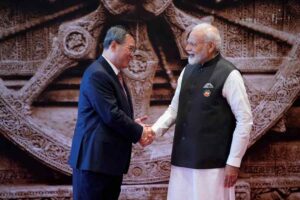
India has consistently opposed the BRI, citing its inclusion of the China-Pakistan Economic Corridor (CPEC), which runs through Pakistan-Occupied-Kashmir. At the summit, Prime Minister Narendra Modi stressed that connectivity must not compromise sovereignty. “We believe that every effort towards connectivity must uphold the principles of sovereignty and territorial integrity. This is also enshrined in the core principles of the SCO Charter,” he said.
India’s rejection comes as the BRI faces increasing scrutiny worldwide. Several participating countries have struggled under mounting debt from projects linked to the initiative, adding to global criticism of Beijing’s approach.