Green Rhetoric, Grey Reality: China’s Deforestation Fuels Global Emissions
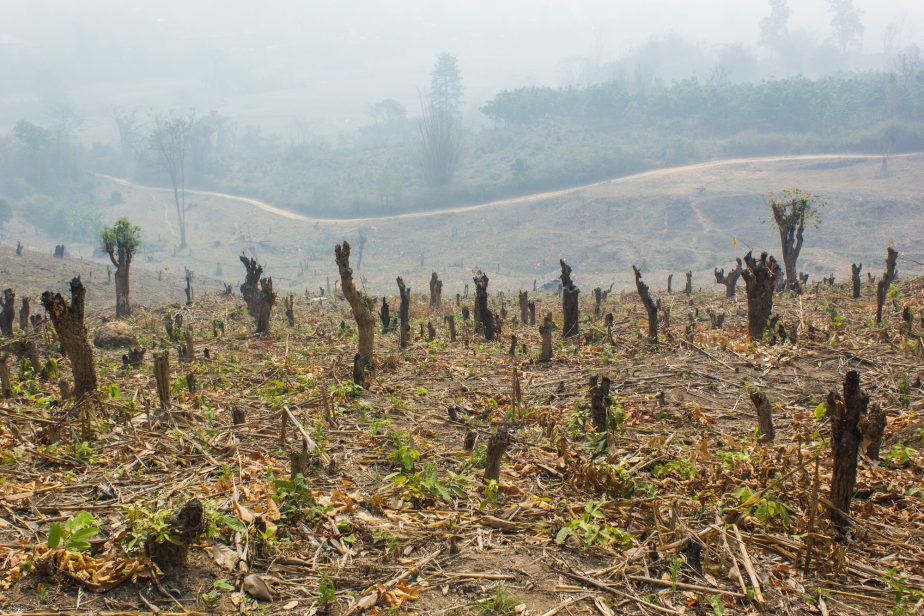
China’s environmental narrative is increasingly split between two contradictory realities. On one hand, the country is aggressively promoting itself as a global climate leader, showcasing massive domestic afforestation projects like the “Three-North Shelterbelt,” and investing heavily in renewable energy infrastructure, including the world’s largest solar photovoltaic farms on the Qinghai-Xizang (Tibet) Plateau. China has pledged to plant and conserve 70 billion trees by 2030 and continues to expand forest cover and carbon sinks through nature-based solutions. These efforts are framed under the banner of “ecological civilisation,” a development philosophy that emphasizes harmony between humanity and nature. Yet this green image is undermined by China’s vast and growing environmental footprint abroad, particularly through its trade in forest-risk commodities and its Belt and Road Initiative (BRI), which has triggered widespread ecological damage across the Global South.
China’s demand for soy, beef, palm oil, and tropical timber has made it a dominant force in global deforestation. According to a 2025 Forest Trends report, China’s tropical deforestation footprintlinked to imports of high-risk agricultural and timber commoditiesaccounted for up to 5% of global carbon emissions from tropical and subtropical deforestation between 2013 and 2022. These embedded emissions, which arise from the production of goods consumed in China but produced elsewhere, are not counted in China’s nationally determined contributions (NDCs) under the Paris Agreement. This omission creates a significant climate credibility gap, allowing China to claim progress on domestic emissions while outsourcing environmental degradation to other nations.
The consequences are stark. China’s imported deforestation, primarily through trade with Brazil, Indonesia, and Malaysia, is responsible for an estimated 200 million metric tons of CO₂ annuallyequivalent to 20–30% of its domestic agricultural emissions. In Brazil’s Amazon Basin, China’s appetite for soy and beef has driven alarming rates of forest loss. In 2022 alone, 96% of China’s soy imports came from regions linked to deforestation, compared to just 55% for the European Union. This disparity highlights China’s disproportionately large impact on Amazonian ecosystems. While Brazil has made strides in curbing forest loss through policy reforms and indigenous land protections, China’s rising demand threatens to reverse these gains.
Indonesia presents another troubling case. Despite China’s investments in clean energy and infrastructure through the BRI, its demand for palm oil, pulpwood, and mining materials has fuelled rampant deforestation. A Traise Earth analysis found that palm oil-driven forest loss in Sumatra surged 3.7 times between 2020 and 2022, largely due to Chinese consumption. China has overtaken both the EU and India as Indonesia’s top palm oil buyer, yet enforcement of sustainability standards remains weak, traceability is poor, and corporate accountability is often absent.
These patterns reveal a deeper governance failure within China’s environmental strategy. The Chinese Communist Party (CCP) has adopted a two-track approach: promoting green development domestically while enabling ecologically destructive supply chains abroad. This duality is not just hypocriticalit’s structurally dangerous. By excluding embedded emissions and biodiversity impacts from its climate commitments, China undermines the integrity of global environmental governance. It sets a precedent for other nations to follow suit, potentially locking the world into a cycle of hollow climate pledges and irreversible ecological tipping points.
Domestically, China’s environmental degradation is also accelerating due to flawed policy decisions. Despite its renewable energy investments, China remains the world’s largest coal consumer, with coal accounting for nearly two-thirds of its energy mix. The Belt and Road Initiative continues to fund coal-fired power plants in developing countries, contradicting China’s climate rhetoric. Meanwhile, rapid urbanization, land conversion, and industrial expansion have led to severe air and water pollution, soil contamination, and biodiversity collapse. These issues threaten public health, food security, and long-term economic stability. According to the Council on Foreign Relations, China’s environmental crisisdriven by decades of unchecked industrializationhas become a major source of public dissatisfaction and a challenge to government legitimacy.
The BRI itself, while touted as a vehicle for sustainable development, has often exacerbated ecological harm. Many BRI projects pass through ecologically sensitive areas, disrupting habitats and threatening endangered species. Although China has pledged to green the BRI by increasing renewable energy investments and mandating ESG reporting, legacy investments in coal and oil still dominate in regions with weak regulatory oversight. Debt-for-nature swaps and public-private partnerships are emerging as corrective mechanisms, but transparency and accountability remain elusive.
China’s failure to integrate consumption-based accounting into its climate pledges is a glaring omission. As the world’s largest buyer of forest-risk commodities, China holds immense leverage to reshape global markets. Yet without binding commitments to reduce embedded emissions, its leadership claims ring hollow. The Paris Agreement’s effectiveness depends on nations addressing not just territorial emissions but also the environmental costs of their consumption. China’s reluctance to do so undermines collective climate action and weakens the credibility of international frameworks.
To bridge this gap, China must extend its ecological civilisation beyond its borders. This means enhancing transparency around commodity imports, integrating embedded emissions into its NDCs, and championing tougher global norms on biodiversity and supply chain accountability. The test of environmental leadership today is not national opticsit’s global outcomes. China’s current trajectory, shaped by policy contradictions and strategic omissions, risks turning its green promise into a global liability.