Nordic Countries Raise Concerns Over Human Rights in China at UNHRC Session

In 2025, at the 60th session of the United Nations Human Rights Council (UNHRC) in Geneva, the Nordic countries—Denmark, Finland, and Sweden—emerged as vocal proponents of human rights advocacy by raising prominent concerns about ongoing abuses in China. Their coordinated efforts, alongside over 25 European and international allies, focused on critical violations in Tibet, Xinjiang (East Turkestan), and Hong Kong. This analysis discusses the key information, statistics, and statements reflecting their strong stance to hold China accountable to its international obligations.
The Nordic Countries’ Unified Position on Human Rights in China
The Nordic nations, known for consistent global human rights advocacy, joined a coalition of nations delivering a powerful joint statement at UNHRC sessions earlier in 2025. The statement, delivered on March 20 by Poland’s Permanent Representative to the UN Office in Geneva, Miroslaw Broilo, called out China for systemic human rights violations including “compulsory boarding schooling in Tibet, suppression of protests, and closure of Tibetan language and cultural schools” (Nordic countries).’ It explicitly demanded China “adhere to its national and international obligations to respect, protect, and fulfill the rule of law and human rights for all” (Nordic countries).
Individually, Finland amplified concerns about the shrinking civic space in Hong Kong and the plight of ethnic and religious minorities in Tibet and Xinjiang. It stressed the importance of China following recommendations from the Office of the High Commissioner for Human Rights (OHCHR) and UN treaty bodies, emphasizing “the urgent need to protect fundamental freedoms and minority rights” (Finland). Sweden echoed these concerns, warning that “continued repression threatens fundamental human rights, and international law must be upheld” (Sweden). Denmark reaffirmed a serious worry about the human rights situations across Tibet, Xinjiang, and Hong Kong, urging greater freedoms of religion, expression, and peaceful assembly (Denmark).
Together with allied countries such as Germany, Ireland, Switzerland, Australia, Japan, and the UK, the Nordic countries demonstrated a broadly unified front demanding China improve protections for minorities and civil society actors.
Focus Areas: Tibet, Xinjiang, and Hong Kong
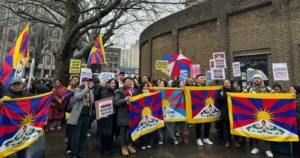
The Nordic-led statements pointed to specific regional contexts where abuses remain alarming. In Tibet, issues include forced assimilation through education policies involving mandatory boarding schools and the suppression of cultural expressions. The closure of Tibetan language schools and crackdowns on protests, such as those against hydropower projects, signify attempts to curtail Tibetan identity and dissent.
In Xinjiang, widespread arbitrary detention of Uyghurs and other ethnic minorities is a centerpiece of criticism. International bodies have documented these as systemic violations, with the UN’s OHCHR extensively reporting on mass detentions, forced labor, and pervasive surveillance.
The situation in Hong Kong also drew significant Nordic focus, particularly restrictions posed by China’s National Security Law. Finland highlighted “restrictions on civic space and shrinking freedoms, undermining Hong Kong’s autonomy and violating international commitments” (Finland). Australia, speaking for Canada and New Zealand, condemned “arbitrary detentions and suppression of dissent under China’s National Security Law” (Australia et al.), both inside Hong Kong and against activists abroad.
The Role of Human Rights Defenders and the UN’s Response
The Nordic countries, together with international peers, underscored the important work of human rights defenders and their ongoing repression by Chinese authorities. UN reports list activists such as feminist advocate Huang Xueqin, lawyer Yu Wensheng, Uyghur doctor Gulshan Abbas, and Tibetan climate activist A-nya Sengdra among those arbitrarily detained or targeted (UN Special Rapporteur).
Mary Lawlor, the UN Special Rapporteur on human rights defenders, described the excessive imprisonment of defenders in China as “one of the most damaging forms of repression” and called on governments worldwide to show solidarity with them and their families (Mary Lawlor). The 10th anniversary of the 709 Crackdown, when over 300 lawyers and legal professionals were targeted, was also commemorated during the session, reaffirming continued patterns of systematic repression (ISHR).
The UN Secretary-General’s annual report on reprisals documented China as the leading perpetrator of retaliatory measures against civil society actors cooperating with UN mechanisms. Specific cases cited include passport revocations for Hong Kong Democracy Council staff Anna Kwok and Carmen Lau, and ongoing intimidation of Uyghur linguist Abduweli Ayup during a UN conference (UN Secretary-General’s report).
Broader International Support and Implications
The Nordic countries are part of a wider international coalition pushing for human rights accountability in China. Their unified statements alongside Germany, Ireland, Switzerland, Australia, Japan, and the UK send a strong diplomatic message affirming commitment to universal rights despite geopolitical complexities. This coalition frequently stresses adherence to reports and recommendations from the Universal Periodic Review and OHCHR, demanding transparency, independent investigations, and immediate release of detained activists.
Efforts by these Nordic-led alliances highlight an insistence on applying international law and human rights conventions, pressing China to comply with binding treaty obligations related to minority protection and civil liberties (Switzerland, Sweden).
Challenges Ahead and Future Outlook
China’s response to these calls remains cautious and defensive, often dismissing international criticism as interference in domestic affairs. However, the growing diplomatic pressure at multilateral forums like the UNHRC indicates increasing international intolerance for sustained abuses.
The Nordic countries’ steadfast advocacy demonstrates a commitment to maintaining global focus on repressed minorities and human rights defenders within China. While geopolitical considerations complicate enforcement, maintaining visibility on these issues fosters accountability and supports civil society actors under threat.
The coming months and years will test China’s willingness to engage constructively with UN human rights mechanisms and implement necessary reforms to protect dissenting voices, religious minorities, and ethnic communities.
At the 60th UNHRC session, the Nordic countries played a pivotal role in raising urgent human rights concerns about China’s treatment of Tibetans, Uyghurs, Hong Kong activists, and others. Their statements—both joint and individual—reflect a deep-seated commitment to international law, human dignity, and empowerment of vulnerable communities under threat.
By spotlighting ongoing abuses, demanding adherence to UN reports, and calling for the release of detained defenders, Denmark, Finland, and Sweden reaffirm their global leadership in human rights advocacy. Their efforts contribute to a broader international movement seeking justice and accountability from China, underscoring the fundamental importance of protecting human rights universally, irrespective of political pressure or diplomatic complexity.