From megaprojects to green corridors, Belt and Road enters a new phase
.jpg?itok=FPBqNA2a)
[The content of this article has been produced by our advertising partner.]
As China’s Belt and Road Initiative (BRI) enters its second decade, its playbook is changing.
HSBC Global Investment Research’s latest report describes how the Belt and Road Initiative is moving from state-led megaprojects towards smaller, greener and more tech-focused investments driven by private capital.
Released just in time ahead of the Belt and Road Summit (September 10-11) in Hong Kong, the report identifies a growing convergence between foreign investment, the global energy transition and the internationalisation of the renminbi, with Hong Kong emerging as a key hub.
Over the years, HSBC has extended its services to help local corporates expand overseas, and capture shifting trade corridors using Hong Kong as a hub.
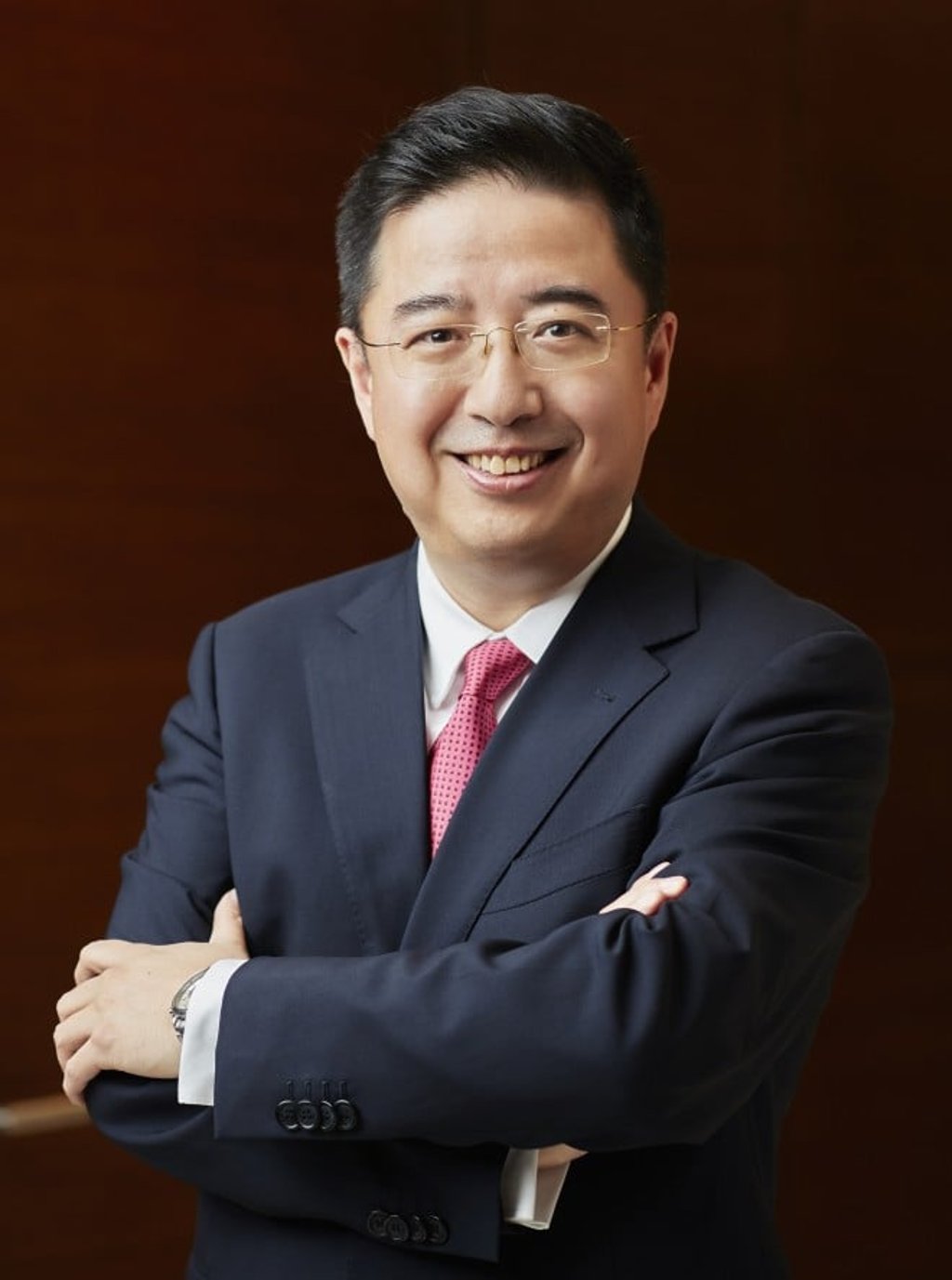
“Hong Kong is increasingly acting as a growth accelerator for both mainland and international firms,” said Frank Fang, Head of Commercial Banking, Hong Kong and Macau at HSBC.
“The city’s deep capital markets, financial infrastructure and experienced talent pool make it uniquely equipped to support companies seeking regional expansion.”
One example is Epic Group, a Hong Kong-headquartered apparel manufacturer with operations across Bangladesh, Jordan, Ethiopia and Vietnam, and a new facility underway in India.
As it grows globally, Epic is counting on HSBC for sustainable financing and cross-border banking support.
“With our global expansion and ESG priorities, our banking partner in Hong Kong has been instrumental in helping us close critical gaps,” said Ranjan Mahtani, Founder and Chairman of Epic Group.

“Their expertise and support have helped us identify challenges early and overcome them with confidence,” he said.
Fang added that as well as large corporates, a growing number of smaller, tech-focused and innovation-driven businesses are also looking to scale overseas, including those in sectors such as clean energy, digital logistics and supply chain software.
These firms, Fang noted, are moving up the value chain, and many are now using Hong Kong as a launchpad to enter markets like Southeast Asia, the Middle East and Europe.
Smaller, greener, more targeted
According to the report, China’s outbound direct investment (ODI) into Belt and Road countries now accounts for nearly 25 per cent of the total, up from less than 15 per cent in 2017. The number of participating countries has grown to more than 150.
But the scale of individual projects has narrowed. The average BRI project size has dropped from US$500mn to US$400mn, as policymakers favour what they describe as “small and beautiful” ventures – often community-level energy and infrastructure schemes, especially in ASEAN and the Middle East.
Investment sources are shifting too. While state-owned enterprises (SOEs) once dominated outbound project finance, private firms now account for 60 per cent of BRI capital deployed in the first half of 2025.
In 2020, all of China’s top 14 BRI investors were SOEs; today, four of the top five are privately held, with many of them operating in renewables, high-tech manufacturing, and digital logistics.
Energy remains a dominant sector, but it’s going green. Sixty-four per cent of BRI energy engagements in the first half of this year were in sustainable energy, up from just 15 per cent a decade ago.
Beijing’s 2021 pledge to stop financing overseas coal projects was a turning point, but the broader shift reflects domestic overcapacity in green tech and a global pivot toward low-carbon infrastructure.
China’s green industries are not only growing but also exporting. New energy product exports are surging, particularly to regions integrated into China’s production and financing networks.
While this has prompted trade tensions in some developed markets, including anti-dumping investigations and tariff threats, it has also cemented new supply chain partnerships with BRI economies that face infrastructure gaps and climate-related capital needs.
.jpg?itok=wUtkAssi)
ASEAN and MENA take centre stage
Geographically, the BRI is now anchored in ASEAN and MENA, which together accounted for more than half of China’s BRI-related investment and construction in 2024.
In Southeast Asia, China invested over US$19bn last year, mostly in EVs, renewables and manufacturing capacity. Chinese automakers now operate plants in Thailand, Indonesia and Vietnam, reshaping the region’s role in the global automotive and energy supply chain.
In the Middle East, relations are moving beyond oil. While energy still dominates China’s import flows, exports to MENA have doubled since the 2018-2020 period.
In particular, Saudi Arabia is emerging as a key BRI partner in advanced manufacturing, digital health and AI, with projects aligned with Vision 2030 and supported by Chinese investors and developers.
RMB takes deeper root in trade and finance
A major outcome of this shift has been the growing use of the renminbi in cross-border trade and project finance.
In 2024, nearly 19 per cent of goods trade between China and BRI countries was settled in RMB, up from less than 10 per cent in 2020.
Cross-border RMB transactions with BRI economies reached Rmb9.1 trillion last year, accounting for more than 20 per cent of total volume.
This trend is supported by a growing financial infrastructure. The People’s Bank of China (PBoC) has now signed 32 RMB swap lines, 22 of them with BRI countries.
Meanwhile, clearing arrangements and CNH-denominated financial products are becoming more widely available, enabling governments and corporates to reduce reliance on third currencies.
Where capital, carbon and connectivity converge
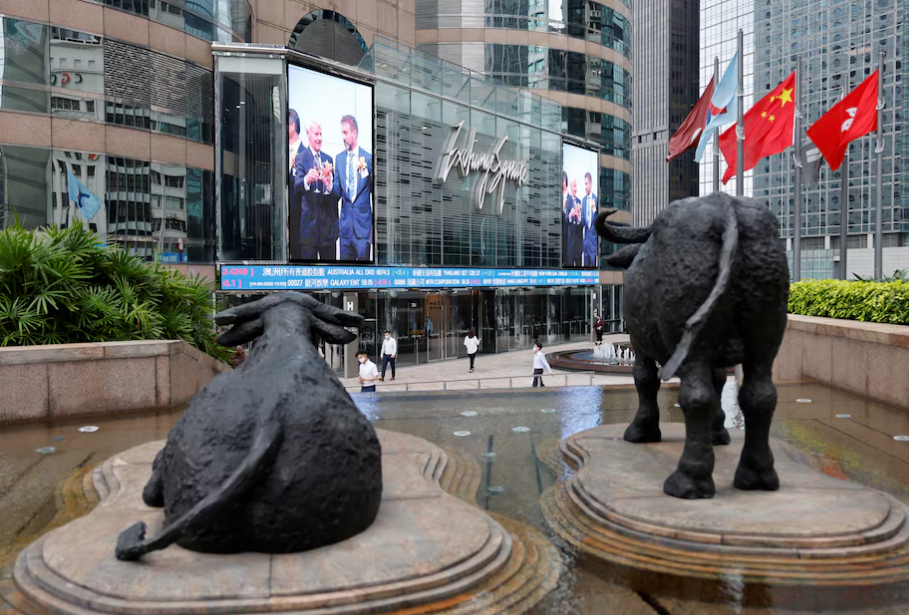
Now playing a central role in this transition, Hong Kong handled more than half of all cross-border RMB flows in the first eight months of 2024 and remains the world’s largest offshore RMB centre, according to the HSBC report.
CNH loan volumes have doubled in recent years, supported by stable local liquidity around Rmb1tn. The Hong Kong Monetary Authority (HKMA) has introduced mechanisms such as the RMB Trade Financing Liquidity Facility and maintains an Rmb800bn swap line with the PBoC.
On the green finance side, Hong Kong issued over US$84bn in green and sustainable debt in 2024 – nearly half of Asia’s total – with contributions from both public and private issuers.
Innovations such as tokenised green bonds and multi-currency structures are helping the city reinforce its role in financing the region’s climate transition.
“The Belt and Road Initiative remains key to China’s opening-up strategy, but in a different form. It has become “greener” and “smarter”. Hong Kong has much to offer as a super-connector,” said HSBC economists in the report.
.jpg?itok=sMVMdOTn)
Summit momentum
The 10th Belt and Road Summit, co-organised by the HKSAR Government and the Hong Kong Trade Development Council, will be held on September 10-11 at the Hong Kong Convention and Exhibition Centre.
The two-day event will bring together officials, business leaders and investors for policy dialogue, project showcases and one-on-one deal-making, with follow-up meetings continuing online from September 15-16.
Despite changes in market focus and shifting trade flows, HSBC continues to serve as a reliable financial partner to Belt and Road corporates, with Hong Kong maintaining its role as both launchpad and regional hub.