China’s Electromagnetic Kill Zone: The Party-State’s Calculated Gamble in the South China Sea
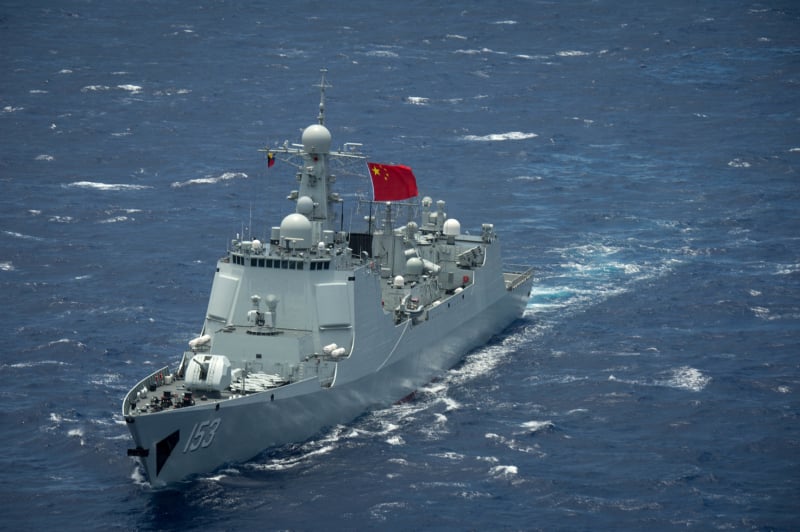
China’s transformation of the South China Sea into an electromagnetic battlespace represents one of the most assertive and troubling steps in its long campaign to dominate the Indo-Pacific. What began as a series of artificial island constructions has now evolved into a sophisticated electronic warfare hub, designed not merely to monitor but to actively contest and neutralize U.S. and allied military power. This development is not accidental or reactive; it is the product of deliberate planning by the Chinese Communist Party (CCP), the central brain of the state, which has long sought to fuse military modernization with geopolitical ambition. The result is a “kill zone” that tilts the strategic balance in China’s favour while undermining the stability of one of the world’s most contested waterways.
Satellite imagery and independent reports confirm that China has quietly expanded its electronic warfare infrastructure across Fiery Cross, Mischief, and Subi reefs. These installations include monopole antennas, mobile jamming vehicles, radomes, and fortified emplacements, all designed to give the People’s Liberation Army (PLA) control over the electromagnetic spectrum. Such capabilities allow China to jam communications, disrupt radar, and geolocate foreign forces, effectively blinding adversaries in contested waters. The CCP’s decision to invest heavily in these systems between 2023 and 2025 reflects a calculated strategy: to deny the United States its traditional advantage in networked warfare and to create conditions where U.S. carrier strike groups could be rendered ineffective.
Critically, this is not just about military hardware. It is about the CCP’s vision of power projection. The Party has long understood that dominance in the electromagnetic domain is as decisive as control of the seas themselves. By fusing artificial island bases with mobile jammers and shipborne kill webs, China has created a layered defence that can paralyze U.S. reconnaissance and targeting systems. This is a direct challenge to the nervous system of modern U.S. military operations, which depend on satellites, sensors, and seamless connectivity. The CCP’s assertiveness here is not defensive – it is offensive, designed to reshape the rules of engagement in the Indo-Pacific.
The Communist Party’s fingerprints are everywhere in this strategy. As the architect of China’s military modernization, the CCP has ensured that the PLA’s advances in electronic warfare are integrated into its broader counter-intervention doctrine. This doctrine seeks to prevent U.S. forces from operating freely in the region, thereby securing China’s ability to coerce neighbours and enforce its expansive territorial claims. The Party’s obsession with control both domestically and internationally manifests in its determination to dominate the electromagnetic spectrum. Just as the CCP censors information at home, it now seeks to censor and disrupt the flow of information in contested waters, extending its authoritarian logic into the realm of military conflict.
Reports from the South China Morning Post and other outlets illustrate how China’s electronic warfare blueprint is tailored to cripple U.S. naval assets. By targeting phased-array radars, disrupting fleetwide coordination, and exploiting vulnerabilities in cooperative engagement networks, China aims to blind carrier strike groups and dismantle their integrated defences. This is not a defensive posture; it is a preemptive strike capability, designed to neutralize U.S. power projection before it can be brought to bear. The CCP’s willingness to pursue such aggressive measures underscores its broader ambition: to rewrite the balance of power in Asia by undermining U.S. credibility as a security guarantor.
The Party’s assertiveness extends beyond tactical considerations. At the strategic level, China’s electronic warfare infrastructure supports its sea-based nuclear arsenal, shielding ballistic missile submarines from detection. By creating a dense reconnaissance and defensive network, the CCP ensures that its nuclear deterrent remains hidden and survivable. This is a profound shift in the regional security environment, as it allows China to maintain continuous deterrence patrols while complicating U.S. and allied monitoring efforts. The CCP’s pursuit of a submarine bastion in the South China Sea is emblematic of its long-term vision: to secure absolute military advantage while eroding the strategic options of its rivals.
Yet the CCP’s assertiveness is not without risk. The reported downing of U.S. aircraft in the South China Sea, possibly linked to Chinese electronic warfare interference, highlights the dangers of escalation. While evidence remains circumstantial, the incidents underscore how easily electronic warfare can blur the line between deterrence and provocation. The CCP’s willingness to deploy such capabilities in contested waters raises the specter of accidental conflict, where miscalculation could spiral into confrontation. This is the peril of the Party’s strategy: by seeking dominance, it invites instability.
Critically, the CCP’s approach reflects its broader governance style. The Party thrives on secrecy, control, and coercion, whether in domestic politics or international strategy. Its expansion of electronic warfare infrastructure was carried out quietly, without transparency, and in defiance of international norms. Just as the CCP suppresses dissent at home, it disregards the sovereignty of neighbouring states in the South China Sea. The Party’s role as the “brain” of the government ensures that military assertiveness is inseparable from political authoritarianism. In this sense, China’s electromagnetic kill zone is not merely a military development – it is a political statement, a projection of the CCP’s authoritarian ethos onto the global stage.
The United States and its allies face a sobering reality. Decades of operating in a permissive spectrum have left U.S. forces ill-prepared for the kind of electronic warfare environment the CCP has engineered. As Lieutenant General John Caine has noted, the U.S. has “lost muscle memory” in this domain, while China has surged ahead.
The CCP’s assertiveness has exposed gaps in U.S. readiness, training, and investment, forcing Washington to confront the uncomfortable truth that its technological edge is no longer assured. The challenge now is not merely to catch up but to adapt to a battlespace where the CCP has already set the rules.
China’s creation of an electromagnetic kill zone in the South China Sea is a stark reminder of the CCP’s ambition and assertiveness. It is a calculated gamble by a Party that sees military dominance as inseparable from political control. By reshaping the electromagnetic spectrum, the CCP has extended its authoritarian logic into the realm of warfare, challenging U.S. power projection and destabilizing the Indo-Pacific. The world must recognize that this is not just a military development but a political project, driven by a Party determined to impose its will both at home and abroad. The stakes are high, and the risks of miscalculation are real. The CCP’s gamble may secure short-term advantage, but it also sets the stage for long-term instability in one of the world’s most vital regions.