When mourning becomes a crime: How a Hong Kong university turned grief into a security threat
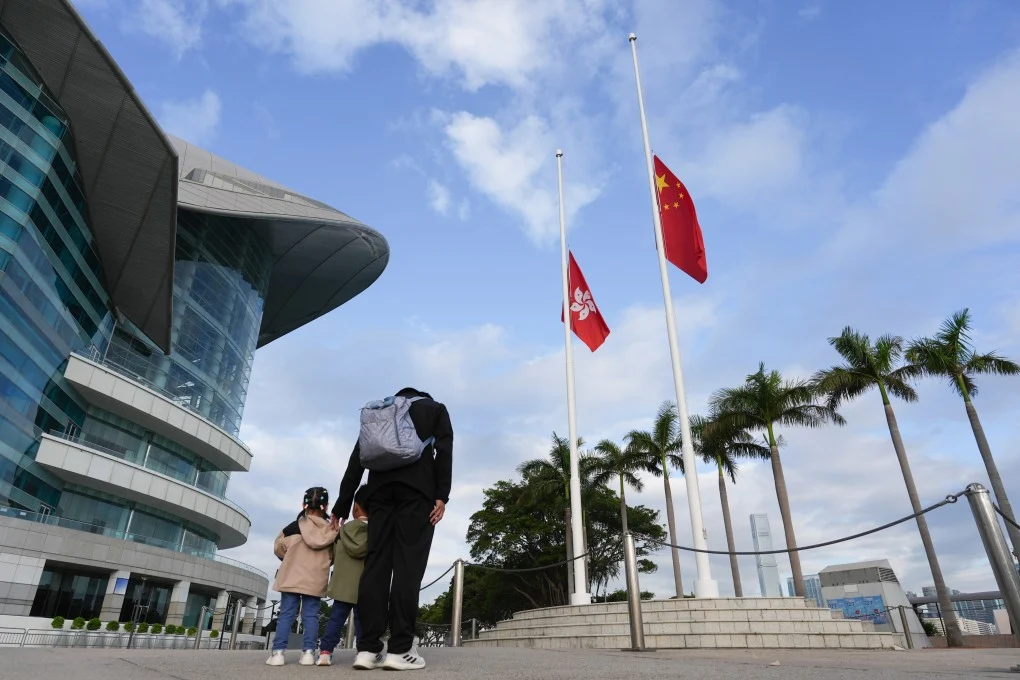
In Hong Kong today, even mourning has become a political act—and one that institutions increasingly seem eager to suppress.
The decision by Hong Kong Baptist University (HKBU) to seal off a student notice board and indefinitely suspend its student union after memorial messages were posted for victims of the deadly Wang Fuk Court fire is not an isolated administrative dispute.
It is a stark illustration of how far the city’s academic and civic spaces have drifted from their once-vaunted role as places of expression, reflection, and dissent.
At least 159 people lost their lives in the Wang Fuk Court blaze on November 26, one of the deadliest residential fires in Hong Kong’s history.
In most societies, such a tragedy would prompt public mourning, scrutiny of official responses, and open discussion about accountability.
At HKBU, however, student expressions of grief were treated not as a humanitarian response but as a threat requiring barricades, surveillance, and institutional punishment.
On December 2, the HKBU Student Union placed large posters on its designated bulletin board—often referred to unofficially as the “democracy wall.”
The messages were hardly incendiary: “In deep mourning for the victims of the Wang Fuk Court fire,” “WE ARE HONGKONGERS,” and “We urge the government to respond to public demands so justice can be served.”
By the next day, the board was sealed off with plastic panels and barricades. Shortly thereafter, the university moved to suspend the student union indefinitely, ordering its leaders to vacate their office and relinquish facilities historically managed by students.
The speed and severity of the response reveal more than administrative concern. They reflect an environment in which language itself—words like “justice” and “demands”—has become suspect.
The posters did not name officials, call for protests, or promote civil disobedience. Yet the reaction suggested that even symbolic expressions of solidarity and grief now fall under an expanding category of political risk.
University authorities reportedly justified the suspension by questioning the student union’s legitimacy and membership base. But such procedural arguments ring hollow when placed against the timing of events.
The union had existed and operated under the same conditions before the memorial posters appeared. It was only after the messages were displayed—and widely noticed—that legitimacy suddenly became an urgent issue.
This sequence has reinforced public suspicion that the disciplinary action was less about governance and more about message control.
The sealing of the notice board was accompanied by a further layer of opacity. According to local reporting, the area was relabeled a “temporary material storage zone,” complete with construction netting and equipment.
Security guards reportedly told journalists they could not film freely. The visual language of the response—barricades, restricted access, reclassification of space—mirrored tactics used to erase or neutralise sensitive sites rather than address the substance of what was being expressed.
Public reaction has been swift and scathing. Online comments questioned how condolence messages could be construed as politically dangerous. Alumni expressed embarrassment.
Others resorted to dark humour, noting that perhaps the wall would have remained open had the posters urged the government to “let the matter drop.”
Such reactions underscore a growing sense among Hong Kong residents that the boundaries of acceptable speech are narrowing to the point of absurdity.
The episode at HKBU cannot be separated from a broader pattern that has followed the Wang Fuk Court tragedy.
In the days after the fire, individuals who sought an independent investigation or publicly questioned safety and accountability found themselves facing police action.
An organiser of an online petition calling for a four-point list of demands, including an independent inquiry, was arrested for alleged online “incitement.”
Former district councillor Kenneth Cheung and others were detained by the National Security Department. A pro-democracy party cancelled a planned press conference on building safety after being told by a government department—unnamed—that it could not proceed.
The cumulative effect of these actions has been to shift the narrative of a public safety disaster into the realm of national security.
Calls for investigation, transparency, or accountability are increasingly framed not as civic engagement but as destabilising behaviour. The tragedy itself fades into the background, while control over discourse takes centre stage.
For universities, this transformation carries particular significance.
Academic institutions are traditionally spaces where difficult questions are asked, uncomfortable truths explored, and societal failures examined.
By sealing a student notice board and dismantling a student union over memorial posters, HKBU has signalled that even within academia, there are limits to how grief can be articulated and who is allowed to articulate it.
The student union’s response highlighted another troubling aspect: the absence of dialogue.
The suspension was described as abrupt, with no prior consultation. Student leaders were instructed to clear out their office within days.
This administrative heavy-handedness reflects a top-down approach increasingly common in Hong Kong’s governance, where decisions are imposed rather than debated, and compliance is expected rather than earned.
What makes the situation particularly bleak is the symbolic nature of what was suppressed.
Memorials are not policy platforms; they are acts of collective remembrance. When institutions move to erase or contain mourning, they send a message that even shared human experiences must be carefully managed to avoid political interpretation.
In such an environment, silence becomes safer than empathy.
The use of a national security lens to interpret reactions to the fire echoes governance practices in mainland China, where disasters are often tightly controlled in terms of information and public response.
In Hong Kong, once known for its openness and pluralism, this approach represents a profound shift.
The National Security Law imposed in 2020 has provided a framework through which a wide range of expressions can be scrutinised, discouraged, or punished—even when they originate from grief rather than dissent.
The sealing of a bulletin board may seem minor in isolation, but it is emblematic of a deeper erosion.
When universities police language, when mourning is treated as subversion, and when student organisations are dismantled without dialogue, the message is unmistakable: the space for independent thought is shrinking.
In the aftermath of the Wang Fuk Court fire, Hong Kong’s authorities and institutions have chosen control over compassion, suppression over solidarity.
The victims of the tragedy are mourned quietly, if at all, while the mechanisms of power move swiftly to ensure that grief does not turn into questions—and questions do not turn into accountability.
In this climate, even a notice board becomes a battleground, and a university campus becomes another frontier in the city’s accelerating retreat from openness.