The anti-corruption wave in Nepal is costing China its BRI advantage
Long after media and researchers reported on the issue, Nepal’s anti-graft body finally filed a corruption case at the Special Court against dozens of high-profile politicians and bureaucrats over irregularities in the construction of Pokhara International Airport (PIA), funded by a Chinese loan of $215.96 million. The charge sheet has alleged cost inflation through high-level political collusion that led to a total loss of $74.34 million and a reportedly substandard airport that has struggled to attract a single international passenger flight to date.
Despite the Nepali government’s constant rejection and Nepali leaders’ protests — because the airport was sanctioned well before Nepal even signed the Memorandum of Understanding on the Belt and Road Initiative (BRI) — China had unilaterally claimed that the PIA was a flagship project under the BRI in Nepal. This “strategic blunder,” manifested in its overall approach to engaging Nepal, has led to a geopolitical reset in Nepal’s political climate after the Gen-Z uprising in September.
Ever since India-Nepal relations soured in 2015, leaving a vacuum, China engaged Nepal more aggressively, which was a departure from its traditional “low-profile” diplomacy and in line with the broader Wolf Warrior diplomacy. The number and frequency of high-level political exchanges grew significantly, its diplomatic tone and posturing became more assertive, and its political manoeuvrings in Kathmandu became more apparent. During this time, China’s role and involvement in Nepal’s infrastructure landscape increased significantly, with Chinese companies and contractors securing most large projects in hydropower, roads and aviation and telecommunication.
As politicians and leaders got embroiled in one corruption scandal after another, China was increasingly enmeshed in Nepal’s corruption environment, either directly through shady, non-transparent deals, high-level political collusion, and cost-escalation caused by inordinate delays in project execution or indirectly through its aggressive practice of elite capture through co-optation by various means, including sponsored visits to China, scholarships to politicians’ relatives, and political facilitation.
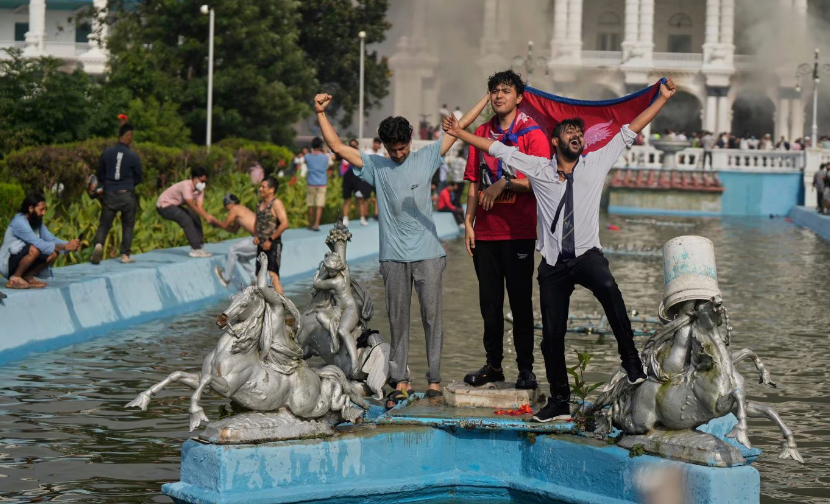
The Gen-Z movement was a major setback for Chinese engagement in Nepal, at least in the form it had progressed over the years. It dislodged the pro-Beijing communists, led by K P Oli, from power and set the stage for newer, alternative forces, including the Rashtriya Swatantra Party (RSP). It has also set in motion a series of corruption investigations against politicians and bureaucrats. Not only did the movement disrupt the patronage network that China cultivated over the years, but it has also severely reduced the chances of Oli’s party regaining the same position and power in the immediate political equation of Nepal. This assessment was evident in China’s measured congratulatory message for PM Sushila Karki, while India and the Western countries extended her a warm welcome. Oli’s departure, along with a potential weakening of communist forces in Nepal, was a welcome by-product of the Gen-Z movement for India and the West; he had been a constant irritant for India, whereas the communists’ pro-China tilt had always irked the US and the West.
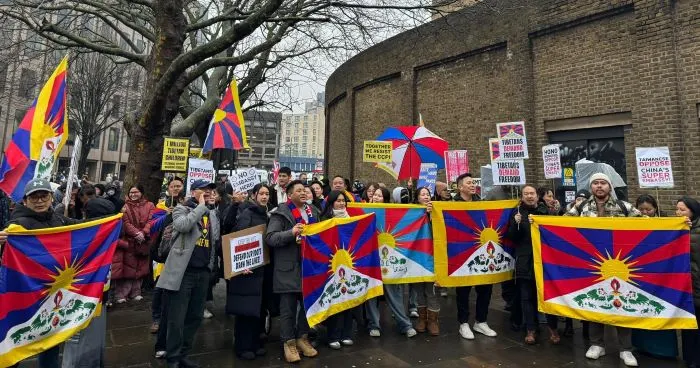
In the aftermath of the Gen-Z protests, China’s attitude has shifted markedly from actively engaging Nepal to a cautious wait-and-watch approach. Without its trusted comrades’ hold on power across the border, Beijing’s geopolitical uncertainty in Nepal seems to have led China to recalibrate its approach from patronage to pragmatism. Its immediate priority in Nepal seems to have reverted to security interests, over Tibetan issues and the One-China Principle, and protecting the existing projects, rather than aggressively pursuing new contracts and agreements under the interim government. That said, its investment in and cultivation of Nepali elites over the years leaves enough room for China to bounce back in case India or the West miscalculate or overestimate their strategic leverage.
For one, the Gen-Z movement appears to have supercharged a new, hyper-nationalist assertion of Nepali sovereignty among the youths, who carry little ideological or political baggage from the past. While this attitude risks proving counterproductive for Nepal’s democracy, especially if marginalised and minority voices are sidelined, a non-partisan hyper-nationalism signals a demand for more transparent engagement from foreign partners. Any country seen as propping up old leaders or parties risks facing popular backlash in Nepal. However, the younger leaders, who seem to advocate for technocratic governance and leadership, may be equally prone to China’s co-optation tactics. Nevertheless, the current political climate offers India an opportunity to reset its ties with Nepal and regain the trust and influence it had lost over the years. By providing neutral support for Nepal’s democratic safe landing and extending technical and financial assistance for Nepal’s development, India can reposition itself as a reliable and culturally connected partner. However, this requires a delicate approach, which refrains from direct political interference on one hand, while working closely to jointly resolve sticking points in the bilateral relations on the other.
China’s influence in Nepal has already waned significantly in the aftermath of the Gen-Z movement, especially due to Oli’s exit and weakened communist forces. The high-profile corruption case in the China-funded and built Pokhara International Airport, which China branded as a flagship BRI project, offers a further setback to the Chinese initiative in Nepal. If the government continues its crackdown on several other corruption scandals, China will likely suffer more damage, either due to its direct association or through the dismantling of the political networks that facilitated China’s engagement in Nepal. This is not to say that the existing networks will have no influence, nor that new parties and leaders will be less prone to co-optation, but the current political climate does offer Nepal’s foreign partners, especially India, an opportunity for a geopolitical reset. The most sustainable way to engage it should be through political, technical, and economic assistance for democratic consolidation, good governance, and inclusive development.